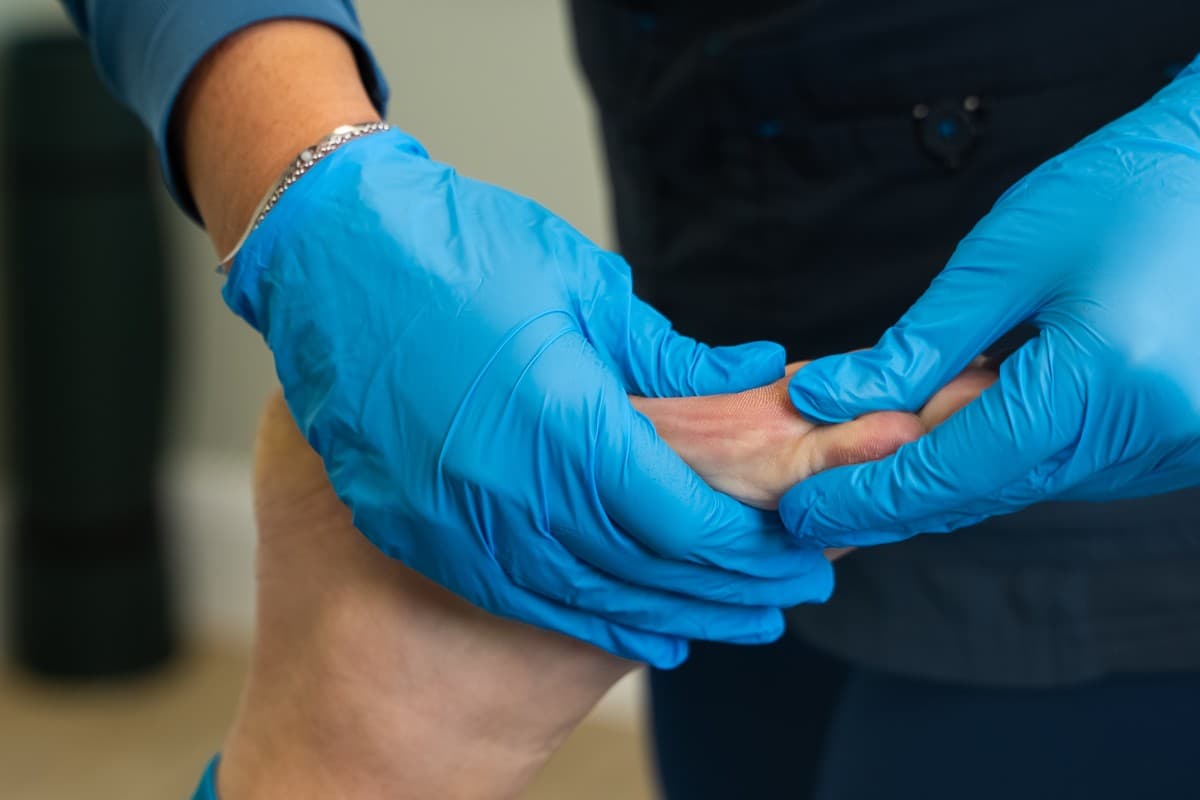



It is one of the questions we are asked most often in the clinic: what is the difference between a chiropodist and a podiatrist? People search online for a chiropodist about as often as for a podiatrist, so it is worth explaining properly.
The short answer: today they are the same profession
Chiropody was the original course, and it focused on skin and nail problems: corns, calluses, thickened nails and similar conditions. In the early 1990s that course was upgraded to a degree, and internationally the name was changed to podiatry.
So if you have been to a chiropodist, you have been to the same profession that is now called podiatry. Many people still use the older word, and both are correct. At Foot Focus our podiatrists are also known as chiropodists.
What the podiatry degree added
When chiropody became a degree, the training kept the skin and nail work and added several areas of care. A podiatrist today is trained in:
- Skin and nail care, the original chiropody work
- Biomechanics, how your feet and legs move and why that causes pain
- Sports injuries in the foot and lower leg
- Diabetic foot care
- Nail surgery, for example for ingrown toenails that keep coming back
That is why a podiatry appointment can cover much more than nails and hard skin. If you have heel pain, a sore knee when you run, a verruca that won't go away or a toenail that keeps growing in, a podiatrist is the right person to see.
What happens at a podiatry appointment
For muscle and joint pain, the appointment is an assessment to find out what is going on. As Mark Ryan explains, it starts with a detailed history: exactly what you are feeling, how long it has been going on and what it is stopping you from doing.
From there we carry out muscle and joint tests. We test the strength and capacity of the muscles, and then the range of movement of each joint. Based on what we find, and the goals you want to reach, we put together a plan to get you where you want to be.
For routine chiropody, such as nails, corns or hard skin, the appointment is usually simpler: we treat the problem and give you advice on stopping it coming back. If heel pain is your problem, our post on why your heel hurts most in the morning is a good place to start.
Make sure your podiatrist is CORU registered
In Ireland, all podiatrists and chiropodists are registered with CORU, the state regulator for health and social care professionals. Registration means the person has the recognised qualification and works to the regulator's standards.
If you are choosing a podiatry clinic, check that every podiatrist there is CORU registered. At Foot Focus, all of our podiatrists and our physiotherapists are CORU registered, so you get the highest level of care.
Do you need a referral?
No. You do not need a GP referral to see a podiatrist or chiropodist. You can book directly at our Finglas or Mount Merrion clinic.
This article is general information about a common foot condition and is not a diagnosis or a treatment plan for any individual. Foot pain has several possible causes that present similarly, so if something is troubling you, have it assessed in person.
References
- Corns and calluses - HSE (Health Service Executive, Ireland)
- Corns and calluses - NHS
This page is for general information and does not replace individual clinical assessment. If symptoms persist, book an appointment with a CORU-registered podiatrist.