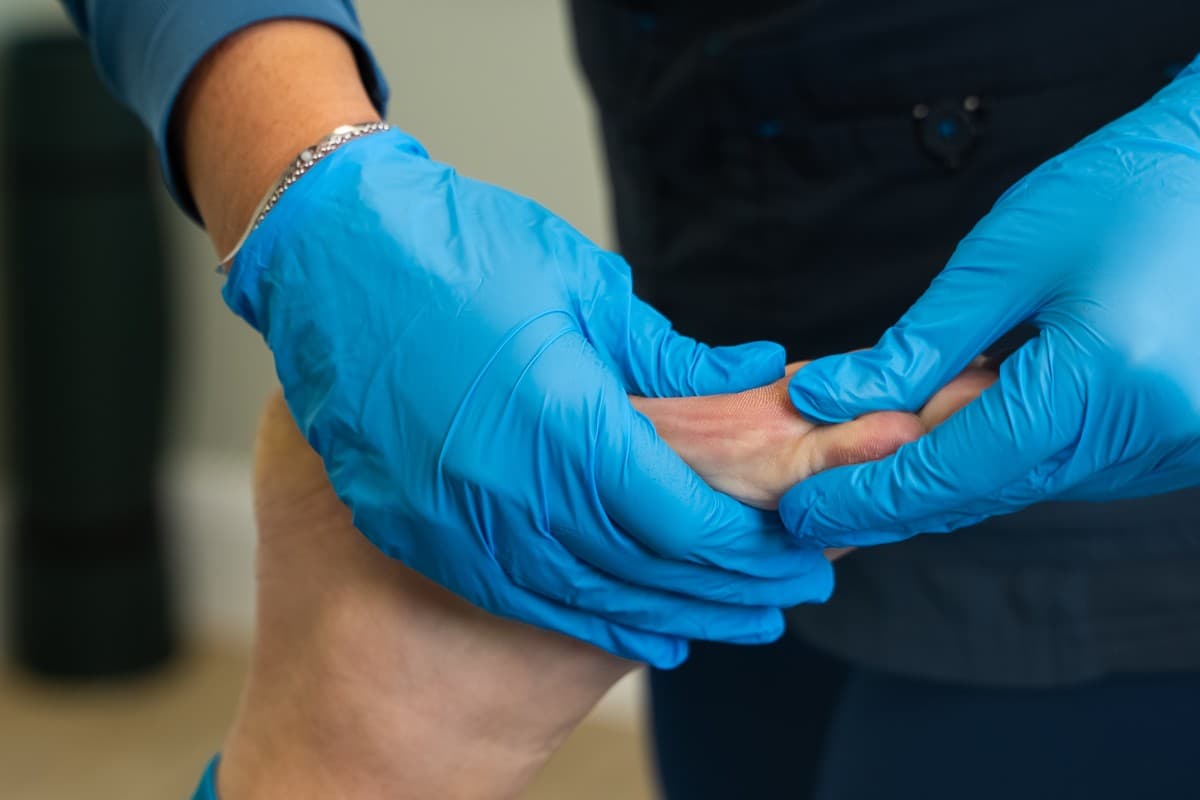
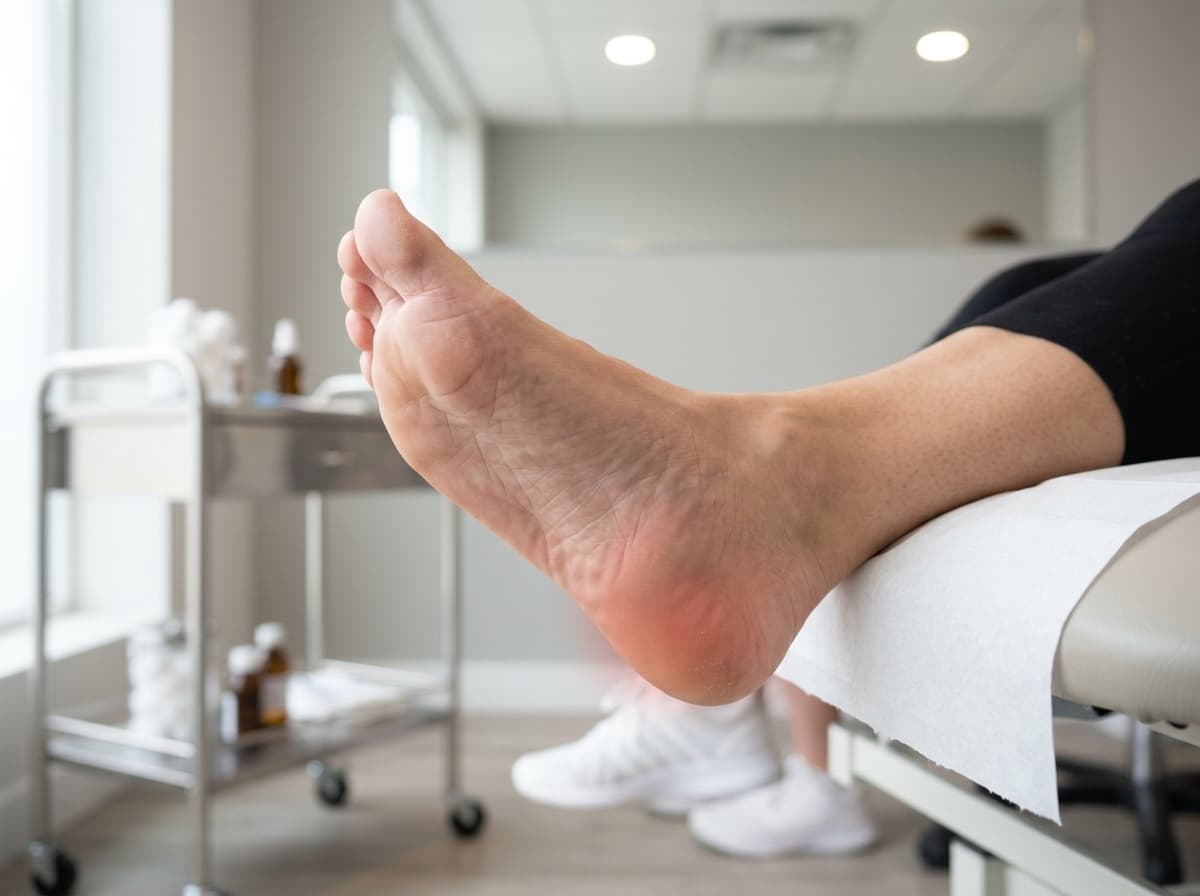
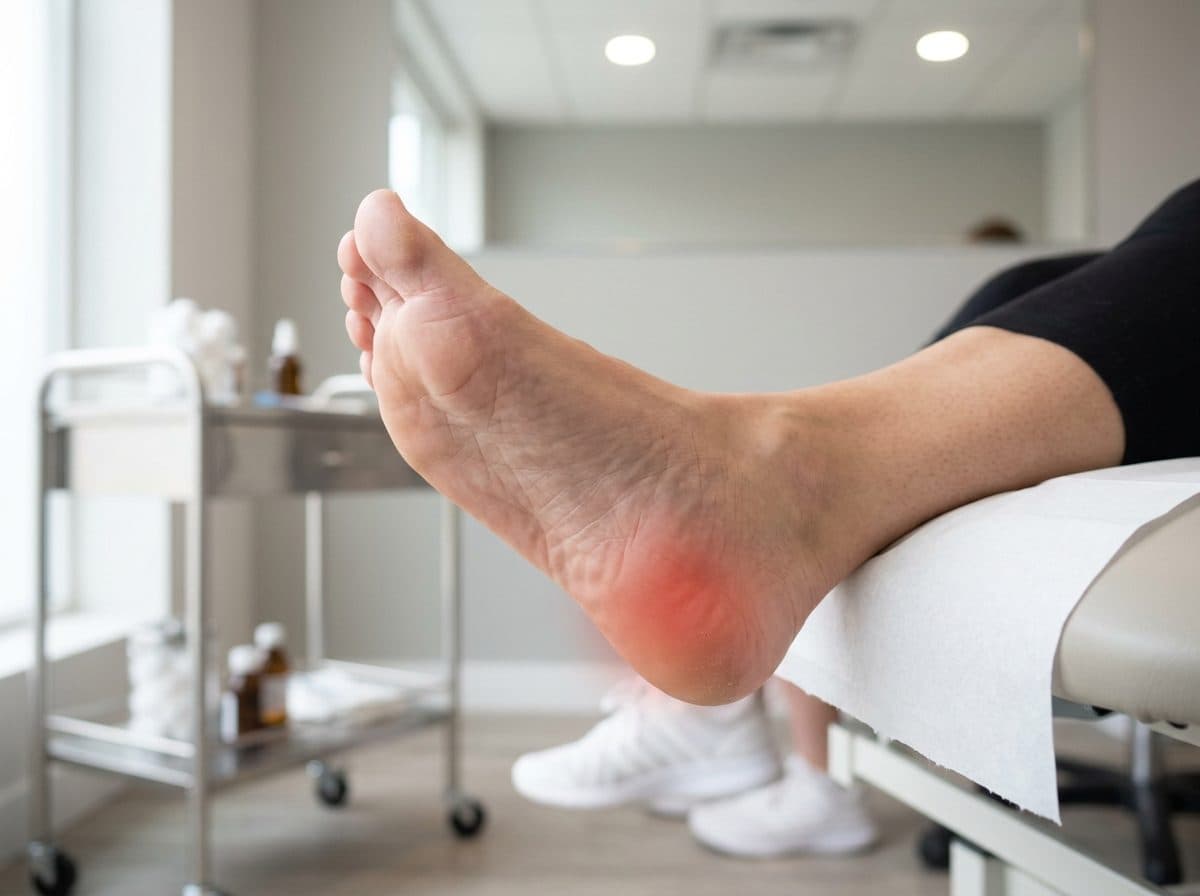
Heel pain is one of the most common reasons people see a podiatrist, and it isn't always plantar fasciitis. It can come from the plantar fascia underneath, the Achilles tendon at the back, the heel's fat pad, or the nerves and bone around them, and they often feel alike. At Foot Focus in Finglas and Mount Merrion, our CORU-registered podiatrists find out which one is sore and why, settle the pain, then build the strength in your foot so it stays away. Most patients feel some relief within two or three sessions, and no GP referral is needed.
Pain under or at the back of your heel with your first steps in the morning
It's sore when you stand up after sitting for a while
It aches more the longer you're on your feet, especially on hard floors
Walking barefoot or in flat, hard shoes makes it worse
You've tried rest, ice, new shoes or insoles, and it keeps coming back
You're starting to worry it won't clear up, and you're doing less of what you enjoy
Rated 4.9 on Google · 397 reviews
What causes it
Your heel takes your full body weight every time it hits the ground, and several structures share that work: the plantar fascia underneath, the Achilles tendon at the back, and the fat pad that cushions the bone. Pain starts when the load on one of them is more than it can cope with, day after day.
Sometimes that's because the load went up: more walking or running, a new job on your feet, harder floors, worn-out shoes, or weight gain. Sometimes it's because the capacity is down: weak foot and calf muscles, a stiff ankle, or the way your foot moves when you walk.
Because different structures can be involved, the right treatment depends on which one is sore and why. That's why the same stretches don't work for everyone, and why we assess before we treat.
Plantar fascia (under the heel)
The band of tissue running from your heel to your toes. Pain is usually under the heel, and sharpest with your first steps in the morning or after sitting.
Achilles tendon (back of the heel)
The tendon joining your calf to your heel bone. Pain or stiffness sits at the back of the heel, often worse in tight shoes, on stairs or going uphill.
Fat pad (the heel's cushion)
The natural padding under your heel bone. When it's bruised or thinned you feel a deep ache in the middle of the heel, worse barefoot on hard floors.
Nerve or bone (less often)
Burning or tingling that lingers even at rest can point to an irritated nerve. A deep ache that hurts when the heel is squeezed can be a stress reaction in the bone.
They can feel alike, and treating the wrong one is a common reason heel pain doesn't settle. That's why the most important first step is an assessment, so we know exactly what we're treating.
Heel pain: 5 common causes and how they feel
01
Plantar fasciitis(plantar fasciopathy)
The plantar fascia, the thick band under your foot, is irritated where it joins the heel.
How it feels: Pain after rest and first thing in the morning, along the plantar fascia under the heel and arch.
02
Bruising of the heel bone(bony oedema of the calcaneus)
The heel bone itself is bruised.
How it feels: Sharp pain in the centre of the heel bone that builds as the day goes on, with aching and throbbing at night.
03
Fat pad syndrome
The fat pad that cushions your heel bone has thinned or been bruised.
How it feels: A dull ache in the centre of the heel that builds as the day goes on, worse after long periods of standing or walking.
04
Heel nerve irritation(Baxter's nerve or calcaneal nerve)
A small nerve around the heel is compressed or irritated.
How it feels: Sharp, shooting pain that comes and goes unpredictably, on the inner or outer side of the heel.
05
Achilles tendinopathy
The Achilles tendon is irritated where it joins the heel bone, in its middle section, or where it meets the calf muscle.
How it feels: Pain after rest, and as activity increases, at the back of the heel or along the tendon.
Why Dublin patients choose Foot Focus
All our podiatrists are CORU-registered and members of the Society of Chiropodists and Podiatrists of Ireland
Founded by brothers Stephen and Mark Ryan, first-class honours podiatry graduates practising since 2011, and open as Foot Focus since 2016
Rated 4.9 out of 5 from 397 Google reviews
More than 100,000 appointments in our Dublin clinics, and over 1,500 most months
Dublin's largest podiatry team in private practice
Two clinics: Finglas (Dublin 11), for Glasnevin, Santry, Cabra and Blanchardstown, and Mount Merrion, close to Stillorgan, Blackrock and Sandyford
No GP referral needed: book directly online or by phone
Open Monday to Friday, 8am to 6pm, at both clinics
The Foot Focus method for heel pain
We don't chase symptoms. We find the cause and treat it.
Most heel pain treatment is aimed at pain relief. Rest, ice and new insoles can settle things for a while. But the pain usually starts because part of the heel is being overloaded, often because the foot and calf aren't strong enough for what you're asking of them. If that isn't fixed, the pain tends to come back. It's why so many people we see in Dublin have had heel pain on and off for years.
It starts with an assessment
Your history
When it started, what sets it off and what you've already tried.
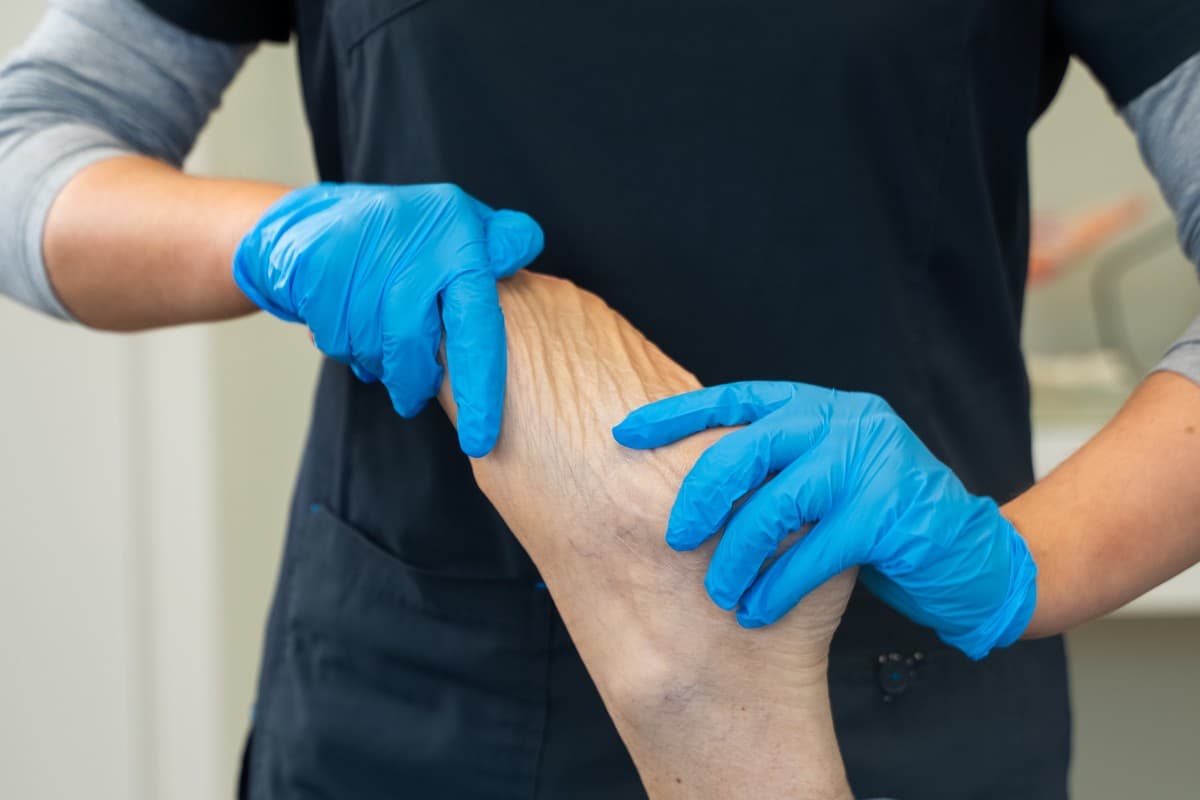
Muscle and joint testing
We check how well your foot and ankle move, and take baseline strength measurements to see where your foot isn't supporting you as it should.
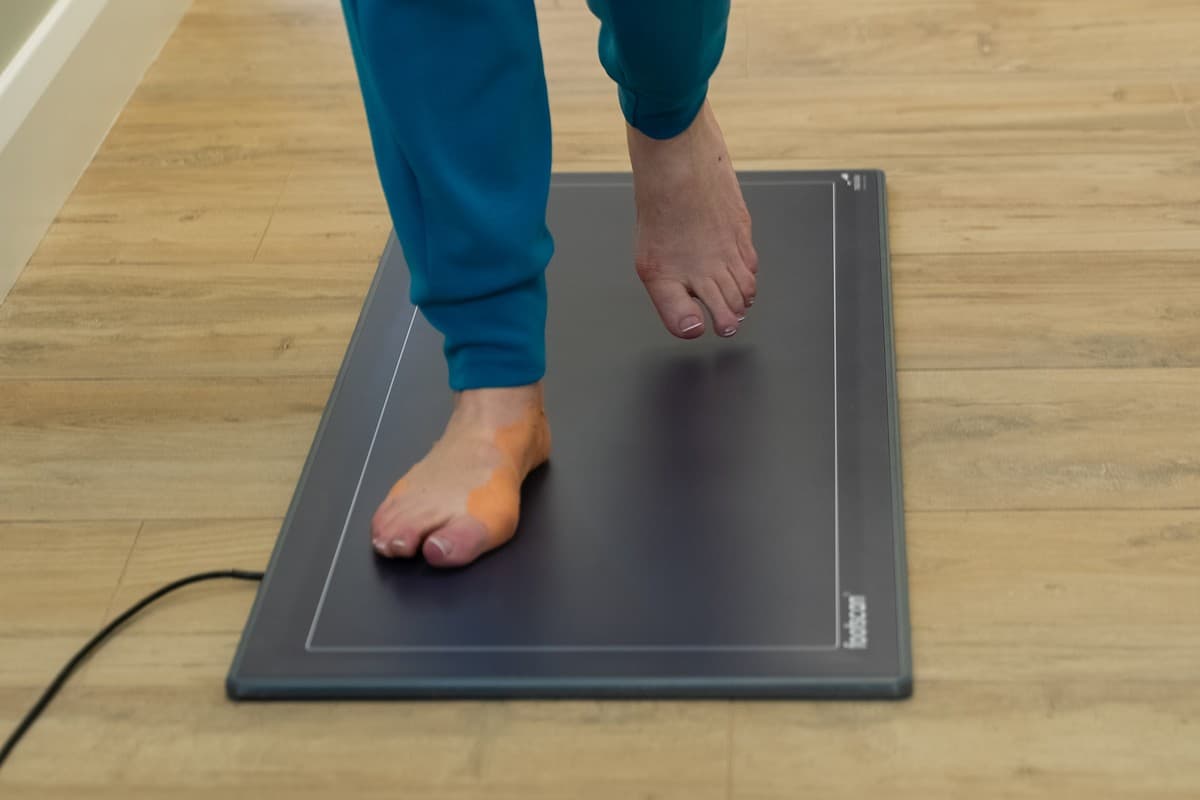
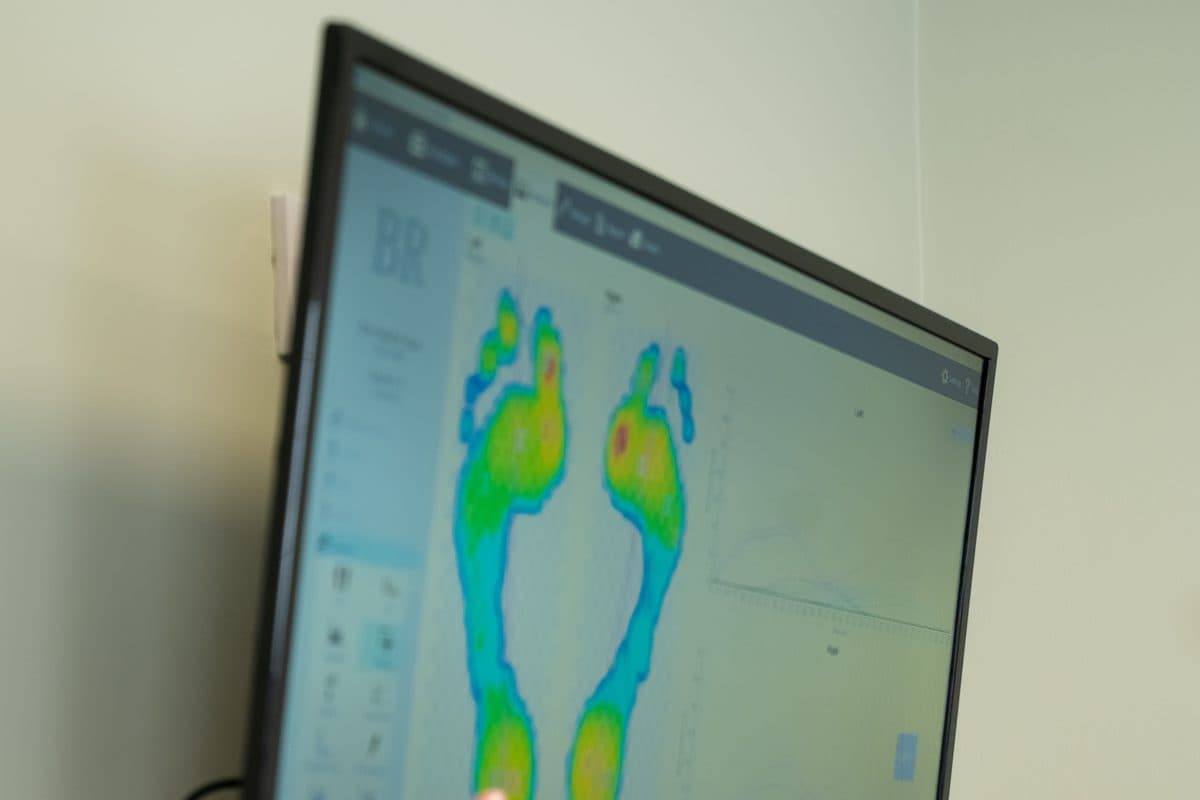
Biomechanical assessment with Footscan®
If your pain has been there for more than six weeks, we also carry out a biomechanical assessment. You walk across our pressure plate. It records thousands of data points showing how force travels through your foot. Where force builds up over an area that tested weak is usually where the pain is coming from.
Put together, these tell us why you have pain and what it will take to get you back to the things you enjoy doing.
The Foot Focus 4 Steps to Recovery
1
Step 1: Settle the pain
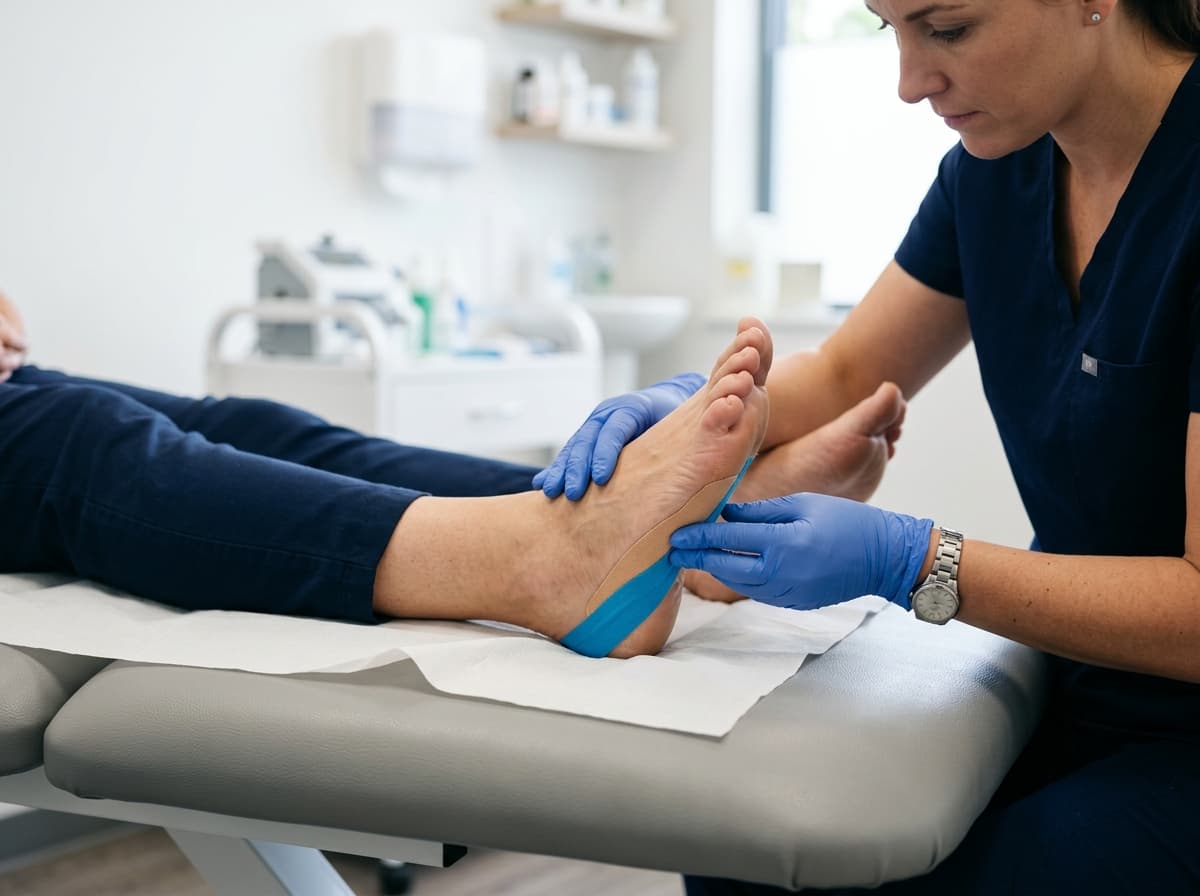
Once we know the cause, the first job is to calm things down so rehab can start. We use padding and strapping to take load off the sore area, Class 4 Remy laser therapy to ease pain and help the tissue cope with load, and footwear advice. These help, but they aren't the fix. They buy the window for the real work.
2
Step 2: Build strength, mobility and flexibility
Your rehab programme is built around your assessment results, your activity level and your goal, so no two are the same. The exercises are progressive. We start at a level your foot can manage and step them up as you get stronger.
3
Step 3: Return to normal activity
With the pain down and your strength up, we bring you back to your activity gradually and stay with you while you do it. There can be good weeks and bad weeks. What matters is that the overall trend is heading the right way.
4
Step 4: Stay strong and prevent re-injury
You finish with the knowledge and the exercises to keep your foot strong on your own, which lowers the chance of the problem coming back.
I can highly recommend Foot Focus as a solution for foot problems. Following 9 months of severe pain, not knowing where to turn to, who to trust and wasting money on several over the counter solutions for heel pain, I am now finally pain free and enjoying my daily life again. The whole team in Foot Focus are extremely warm, welcoming and absolute experts in their field of foot care. You will not have to look further. My thanks to Molly, Jarrod and Sinead for making this such a positive productive experience in my foot care.
Can heel pain be cured, or does it always come back?
Yes, it can. How quickly depends on how long you've had it and what recovery looks like to you, whether that's walking the dog without limping or running a 5K. We agree on a goal with you at the start and build your rehab around it. Heel pain comes back when the foot loses the strength it needs for what you're asking of it. So you finish with a simple exercise routine and the know-how to keep your foot strong, long after you've stopped coming to see us.
How long does heel pain take to heal?
Most patients feel some relief in the first two or three sessions. That's step one of our method, and it's what lets us get on with the real work of strengthening the foot. Full recovery depends on three things: how long you've had the pain, how strong and mobile your foot is now, and what you're aiming to get back to. If it started a few weeks ago and your goal is to walk around the block without pain, that's usually a matter of weeks. If you've had it for months, can barely walk, and want to run a 10K, expect a few months of steady work. After your assessment we'll give you an honest estimate for your case.
Can you fix heel pain in a week?
Honestly, no. If you've had it for more than a month, it's very unlikely to be gone in a week, whatever a video or an insole advert promises. Anything that's been building for months has usually left the foot weaker than it should be, and strength doesn't come back in seven days. If it only started in the last few days, it's a different story, and getting it looked at early is the quickest route back. Either way, a week is enough to get the pain settling and a plan in place.
Do the exercises and stretches on YouTube work?
Some of them, for some people. Exercises are the core of how heel pain gets better, but only if they're the right ones for what's causing yours. A generic calf stretch or towel curl might be exactly what one person needs and a waste of time for the next. That's why we assess first: to find the cause, measure where your foot is starting from, and then give you exercises that match. If you've been doing the online ones for a few weeks and nothing's shifted, that's usually the sign they're not the ones you need.
Do I need insoles or orthotics?
Not necessarily. An orthotic doesn't fix anything on its own. It moves pressure from one part of your foot to another, so it only helps if the part taking the new load is strong enough to cope. That's why we work on making your foot as strong and mobile as possible first, and add orthotics only if the assessment shows you need them. When they are the right call, ours are 3D-printed from your own pressure scan rather than picked off a shelf. If you've already bought insoles in a shop, bring them to your assessment.
Is my heel pain a heel spur?
Probably not. Plenty of people have a heel spur and never know it, because spurs on their own don't usually hurt. So a spur on an X-ray doesn't mean it's the cause of your pain, and heel pain doesn't mean you have a spur. In most cases the pain is coming from the plantar fascia, and the spur is a bystander. The treatment is the same either way: find out why the fascia is overloaded and fix that. If you've had an X-ray, bring it along.
Can I keep walking or running with heel pain?
In most cases, yes. Stopping altogether tends to leave the foot weaker, which is the opposite of what you want. What we do is bring the load down to a level your foot can handle: shorter distances, strapping to support the sore area, maybe a change of footwear, and Class 4 laser to take the edge off the pain. Then we build the distance back up as you get stronger. How much you can safely do depends on your assessment, so book that first if you're in pain now and unsure.
Why is it worst first thing in the morning?
Because tissue that's been overloaded stiffens up when it rests. While you're on your feet during the day it's being loaded and warmed up with every step. Overnight there's no weight on it, it cools and tightens, and your first steps in the morning ask it to take your full body weight all at once. That's the sharp pain or stiffness. After a few minutes of moving it eases. The same thing happens when you stand up after sitting for a while.
Do you offer shockwave therapy or steroid injections?
No. Both can ease the pain for a while, and for some people that's useful. But neither one changes why the area was overloaded in the first place, so on their own the pain tends to come back. Our approach is to settle the pain with strapping and Class 4 laser, then fix the cause by building strength. If your case is one where an injection is worth considering, we'll tell you and point you to the right person.
Should I see a physio or a podiatrist for heel pain?
For heel pain, a podiatrist. Physios treat the whole body, and a good one will help. But feet are all we do, all day, every day, and heel pain is one of the most common things we see. That means we've got the kit for it, like pressure plate analysis and Class 4 laser, and we've seen every version of it walk through the door.
How much does an assessment cost, and is it covered by health insurance?
If you've been in pain for under 6 weeks, a podiatry assessment is €90: muscle, joint and strength testing to find the cause, then a plan to get you back to what you love. If it's been over 6 weeks, a full biomechanical assessment with our Footscan pressure plate is €169. Most Irish health insurance plans that include podiatry will cover some or all of it. Check your policy or ask your insurer, and we'll give you a receipt to claim with.
Do I need a GP referral?
No. You can book directly with any of our clinics, online or by phone, and you'll be seen by a CORU-registered podiatrist.
References
Heel pain - HSE (Health Service Executive, Ireland)
This page is for general information and does not replace individual clinical assessment. If symptoms persist, book an appointment with a CORU-registered podiatrist.
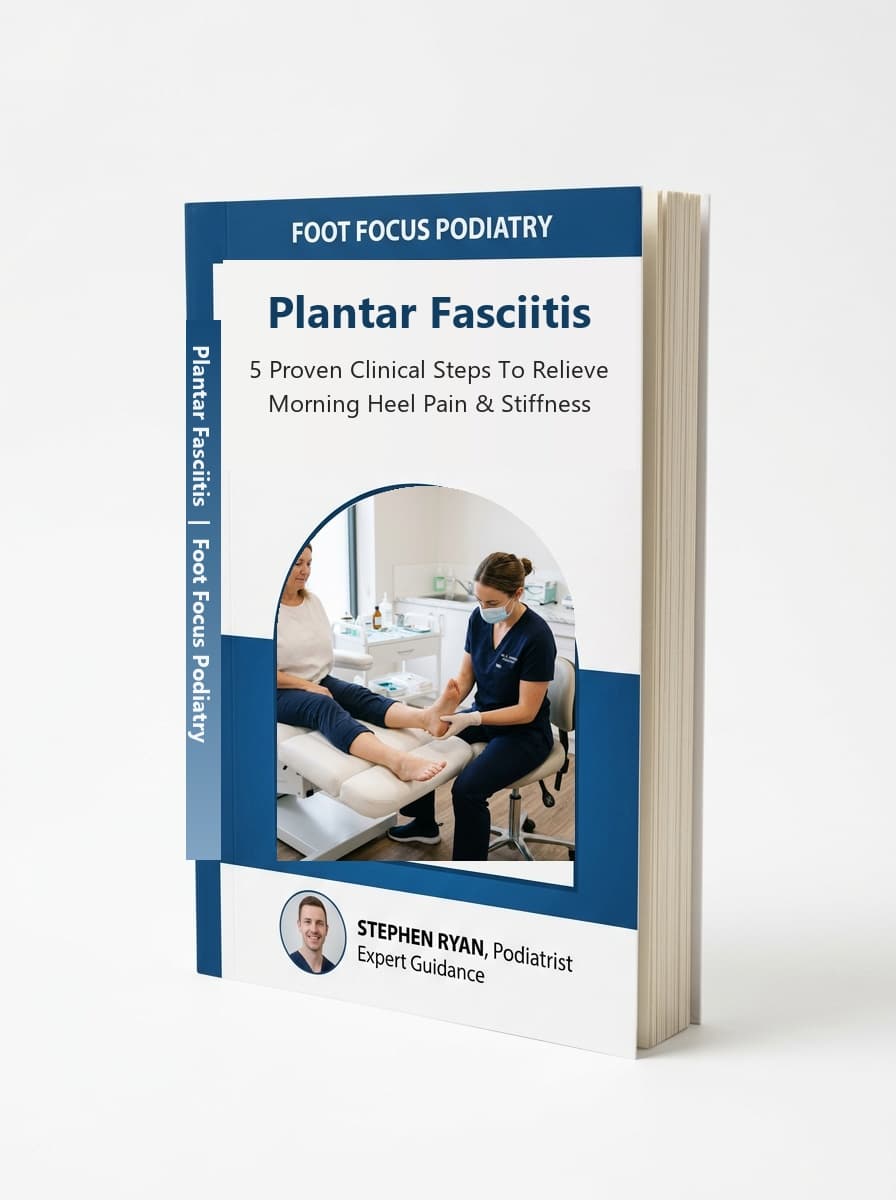
Read our free heel pain guide
Written by our podiatrists. Practical tips you can start today to ease your heel pain at home. Pop in your details and it's yours straight away. One of our team will also give you a quick call or text to talk you through it and answer any questions.
Patient Education & Care
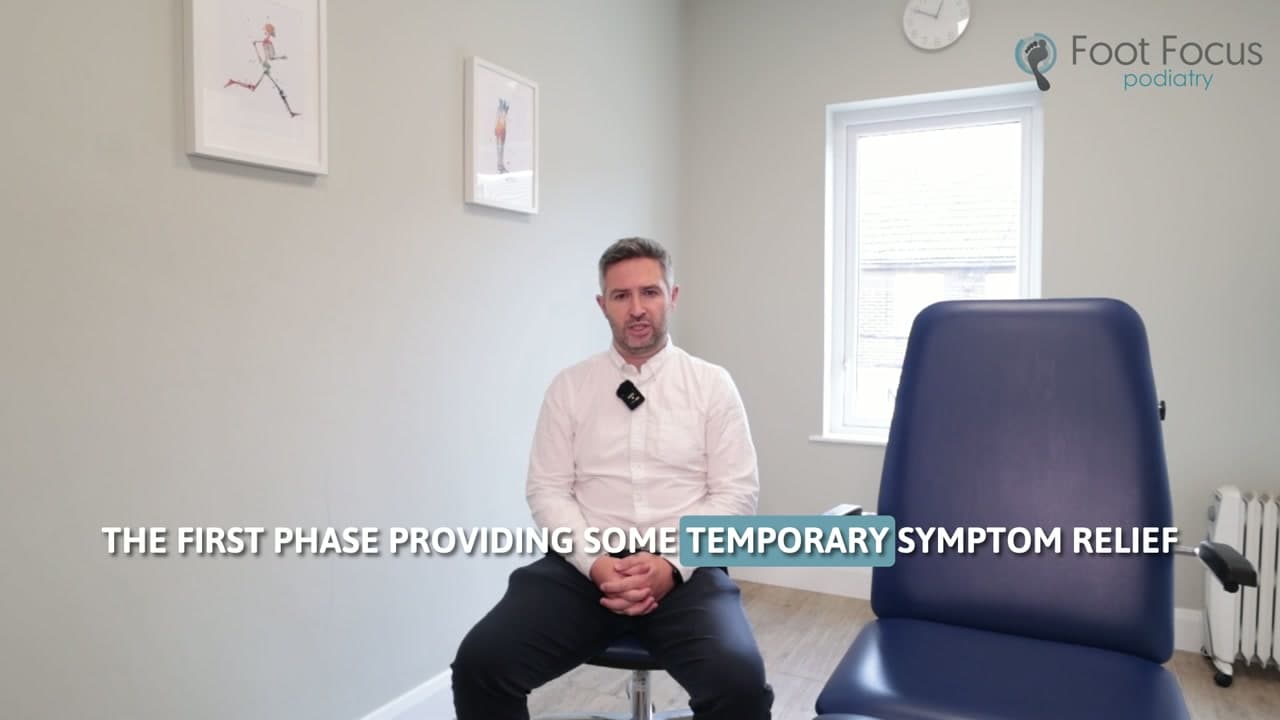
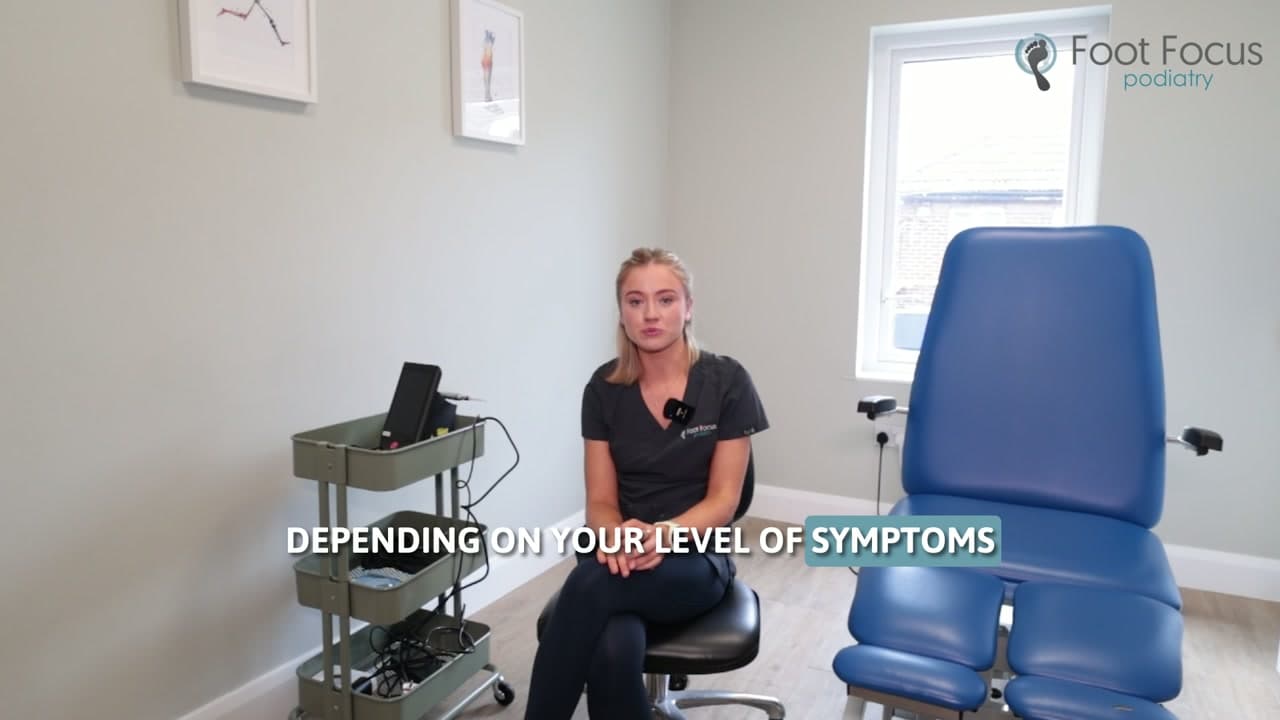
Watch: heel pain explained by our podiatrists
Short videos from our own clinicians.
Molly RyanCC Captioned
How We Treat Heel Pain at Foot Focus
Our comprehensive multi-modal approach to chronic and acute heel pain.
Heel Pain TreatmentLaser TherapyClinical Recovery
Molly RyanCC Captioned
Should I Rest When I Have Heel Pain?
Understanding relative rest versus active loading in tendon and plantar fascia recovery.
Rest vs MovementRehab AdviceHeel Care
Free call back
Ready to stop working around the pain?
Leave your number and one of our team will ring you back, usually within one working day. They'll listen to what's going on, answer your questions and find you a time in Finglas or Mount Merrion. There's no pressure to book.