
Ingrown toenail treatment in Dublin
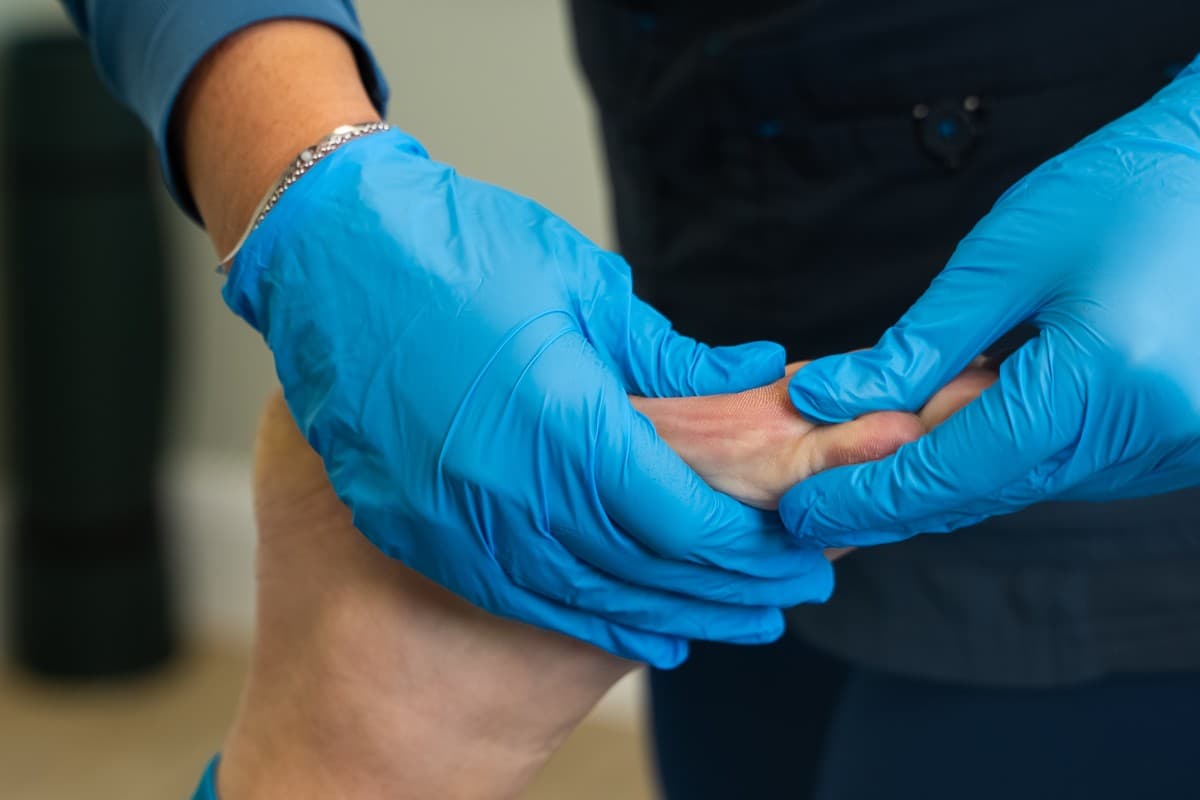
An ingrown toenail is when the edge of the nail grows into the skin beside it, making the toe red, swollen and painful, and sometimes infected. In most cases we can remove the piece of nail that's digging in at your first appointment, and the pain eases straight away. If it keeps coming back or keeps getting infected, we can fix it for good with a small procedure under local anaesthetic. At Foot Focus in Finglas and Mount Merrion, our CORU-registered podiatrists treat ingrown toenails every day.
Does this sound like you?
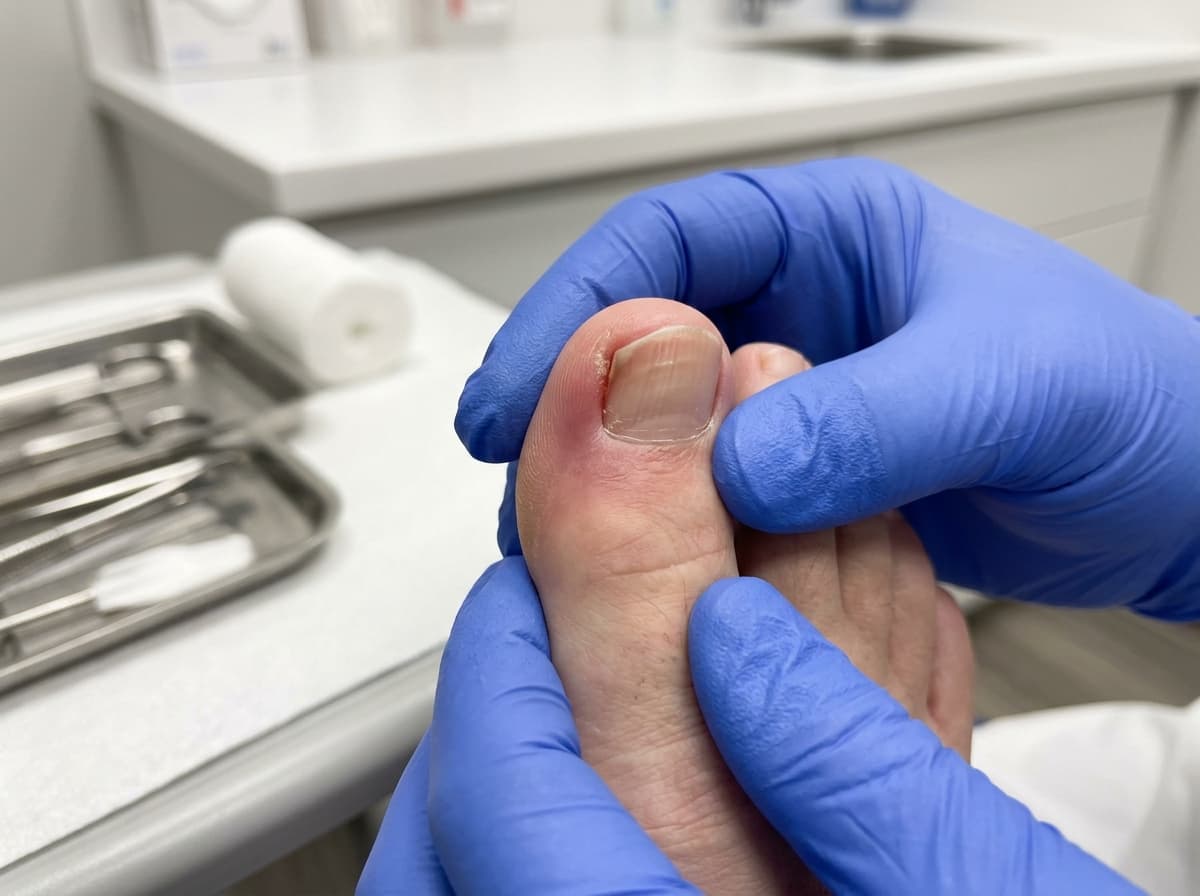
- A throbbing pain down the side of your toenail that won't settle
- The skin beside the nail is red, swollen and sore to touch, even with the weight of the duvet on it
- You're wearing sandals or loose shoes because normal shoes hurt too much
- You've tried cutting the corner out yourself and it came back worse
- It's weeping, bleeding or has red, raw skin growing over the nail edge
- You're putting off getting it looked at because you're worried it will hurt
If any of that sounds familiar, we can help. The sooner it's treated, the quicker it settles.
Call us or book an appointment.
Call us on (01) 556 3662Rated 4.9 on Google · 397 reviews
What causes ingrown toenails?
An ingrown toenail happens when the side of the nail presses into the skin until it breaks through. The most common reasons:
- The shape of your nail. Some nails are naturally very curved or wide, and it often runs in families. This is the main reason they keep coming back.
- How the nail is cut. Cutting too short or digging down into the corners leaves a sharp edge. Always follow the natural curve of the nail.
- Tight or narrow shoes that squeeze the skin against the nail.
- An injury, like stubbing the toe or having it stood on.
- Sweaty feet, which soften the skin and make it easier for the nail to dig in.
Why won't it get better on its own?
Once the nail has broken the skin, every step pushes it in a little further, so it rarely settles by itself.
Cutting the corner out yourself usually makes it worse. It's very hard to reach the whole edge, so a small sharp piece gets left behind under the skin. As the nail grows forward, that piece digs in deeper, and the infection often comes back a few weeks later.
Antibiotics can calm an infection, but they can't remove the piece of nail causing it. Until that's taken out, it will keep flaring up.
If the shape of the nail is the cause, trimming it back only helps for a while. That's when nail surgery is the permanent fix.
Why Dublin patients choose Foot Focus
- All our podiatrists are CORU-registered and members of the Society of Chiropodists and Podiatrists of Ireland
- Founded by brothers Stephen and Mark Ryan, first-class honours podiatry graduates practising since 2011, and open as Foot Focus since 2016
- Rated 4.9 out of 5 from 397 Google reviews
- More than 100,000 appointments in our Dublin clinics, and over 1,500 most months
- Dublin's largest podiatry team in private practice
- Two clinics: Finglas (Dublin 11), for Glasnevin, Santry, Cabra and Blanchardstown, and Mount Merrion, close to Stillorgan, Blackrock and Sandyford
- No GP referral needed: book directly online or by phone
- Open Monday to Friday, 8am to 6pm, at both clinics
The Foot Focus method for ingrown toenails
We sort the pain out first, then make sure it doesn't keep coming back.
Step 1: Find out what's going on
We look at the toe, the shape of the nail, whether it's infected and how often it has happened before. That tells us whether it can be treated in clinic or needs a small procedure to fix it for good. If surgery is the right option, we explain exactly what's involved and what it costs before anything is booked.
Step 2: Relief on the day
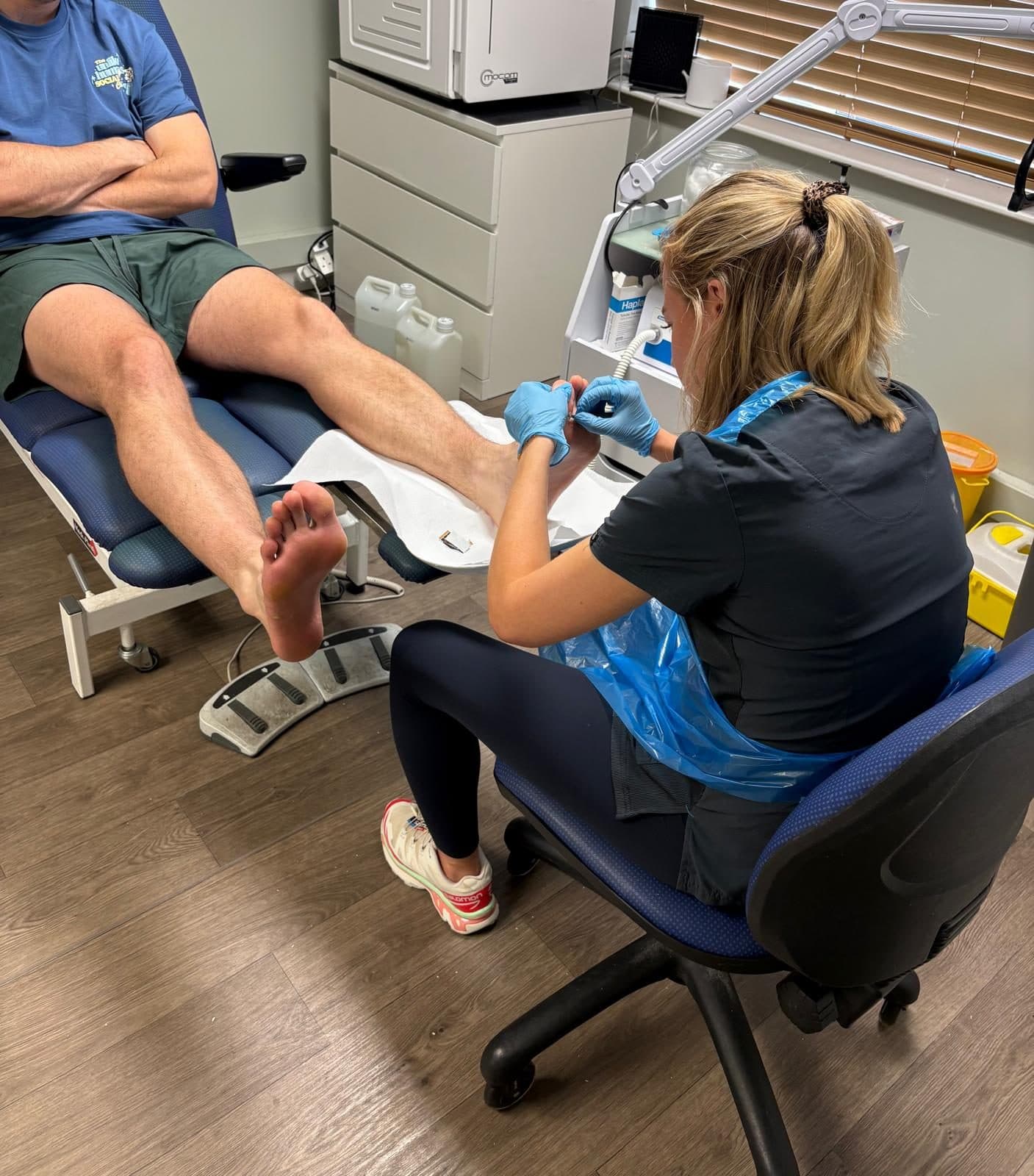
In most cases we carefully remove the piece of nail that's digging into the skin at your first appointment. Most people feel the difference straight away. We clean and dress the toe and show you how to look after it at home.
Step 3: Nail surgery, if it keeps coming back
If the nail is naturally curved or the problem keeps returning, we numb the toe with local anaesthetic and remove the side of the nail that's growing in (a partial nail avulsion, or PNA). We then treat the root with a chemical called phenol so that edge doesn't grow back. The rest of the nail stays and grows normally. The procedure takes 30 to 50 minutes and we do it at both clinics. Read more about ingrown toenail removal.
Step 4: Aftercare until it's healed
After surgery we see you the next day to check the toe and change the dressing, then keep checking it until it has fully healed. All your follow-ups and dressings are included. If the first procedure is unsuccessful, we'll do it a second time for free (T&Cs apply). We also show you how to cut your nails so it doesn't happen on another toe.
Start with an assessment
No GP referral needed.
Frequently asked questions
Does ingrown toenail treatment hurt?
In-clinic treatment is done without numbing. It can be painful for a short time while we remove the piece of nail, but it's quick, and most people say it's worth it for the relief afterwards. If you need surgery, the toe is numbed first. The injection stings for a few seconds, then you won't feel the procedure.
How much does ingrown toenail treatment cost?
Treatment in clinic is a general chiropody appointment, €80 for 30 minutes. If you need surgery, it's €650. That includes the surgery, all your follow-up visits and dressings, and a second procedure if the first is unsuccessful (T&Cs apply). Most Irish health insurance plans that include podiatry will cover some or all of it, and we give you a receipt to claim with.
Will I lose my whole toenail?
Almost never. We usually remove only a narrow strip down the side that's growing in. The rest of the nail stays and looks normal.
I've had antibiotics and it's still not better. Why?
Antibiotics can calm the infection, but they can't remove the piece of nail that's causing it. Until that's taken out, the infection tends to keep coming back.
Can I treat an ingrown toenail at home?
You can keep it clean and wear roomy shoes, but try not to cut the corner out yourself. It usually leaves a sharp piece behind that makes things worse. If the toe is red, swollen, weeping or getting more painful, get it looked at. If you have diabetes or poor circulation, don't wait.
Should I cut a V into the middle of my nail?
No. It's an old myth. The nail grows forward from the base, so a V in the middle does nothing for the edges and can weaken the nail.
Do you treat ingrown toenails in children and teenagers?
Yes, they're very common in teenagers and we treat them regularly in clinic. We look at every case individually, but surgery is unlikely to be recommended for anyone under 16.
Do I need a GP referral?
No. You can book directly online or by phone at either of our clinics.
Where do you treat ingrown toenails?
At both our clinics, Finglas (Dublin 11) and Mount Merrion. Nail surgery is done at both too.
References
- Ingrown toenail - HSE (Health Service Executive, Ireland)
- Ingrown toenail - NHS
This page is for general information and does not replace individual clinical assessment. If symptoms persist, book an appointment with a CORU-registered podiatrist.
Watch: ingrown toenails explained by our podiatrists
Short videos from our own clinicians.
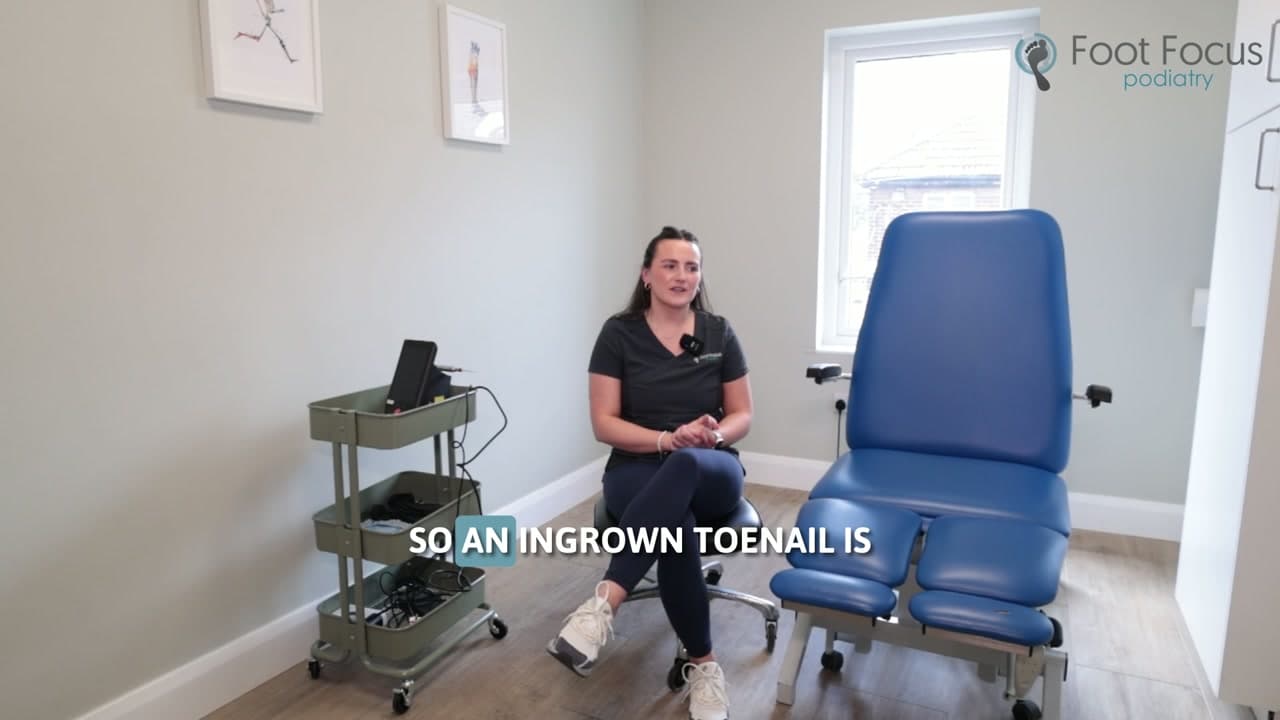
What is an Ingrown Toenail?
Understanding nail wall inflammation, causes, and conservative vs surgical options.
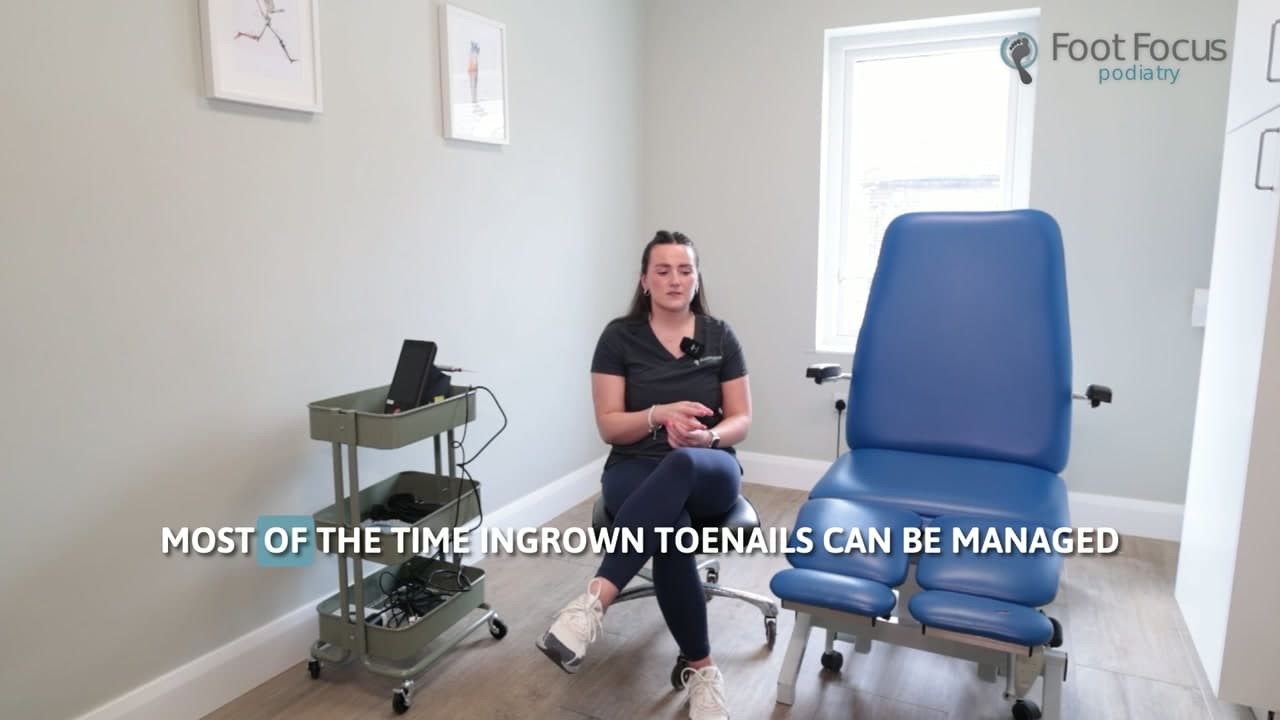
When Do I Need Nail Surgery?
Indications for minor surgery when conservative treatments fail to prevent infection.
Ready to sort out your ingrown toenail?
Leave your number and one of our team will ring you back, usually within one working day. They'll answer your questions and find you a time in Finglas or Mount Merrion. There's no pressure to book.
Would rather talk now? (01) 556 3662