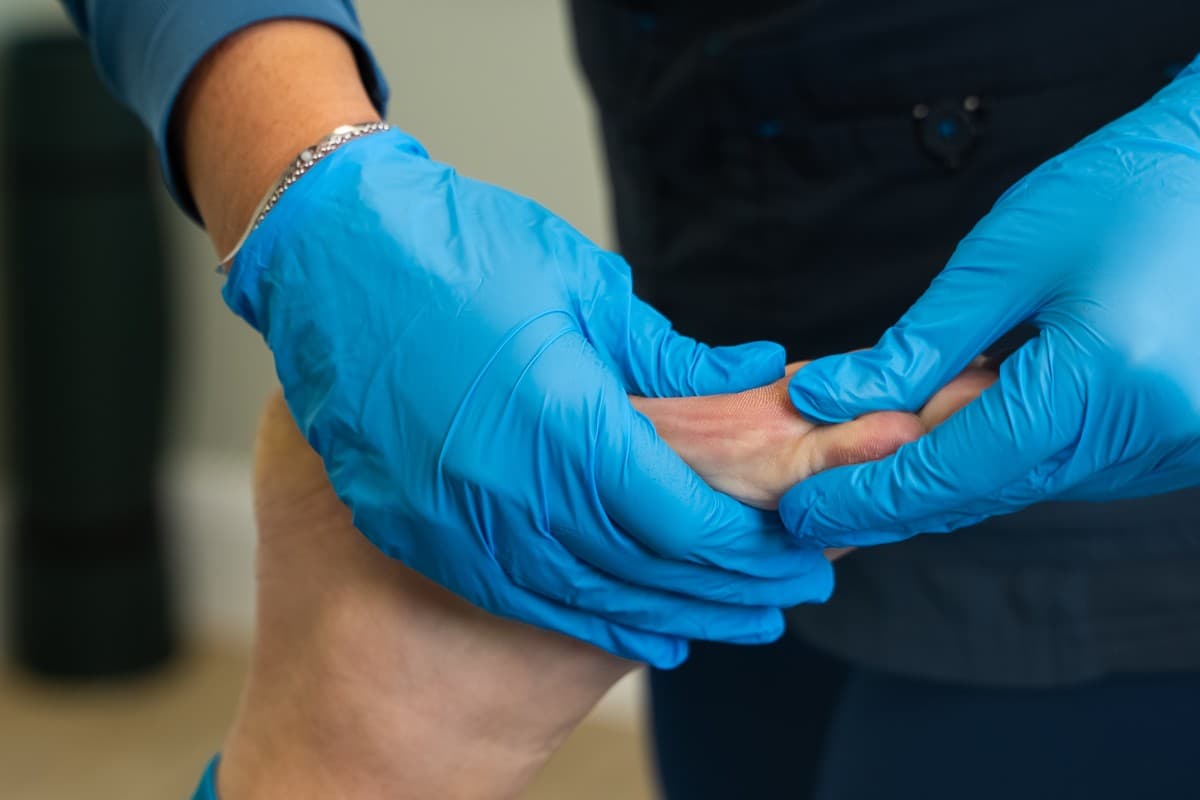



Ingrown toenails are one of the few problems we see where the standard home remedy reliably makes things worse, and where a single appointment often resolves something people have put up with for months.
What an ingrown toenail actually is
The edge of the nail has begun pressing into the skin beside it. Every step drives it in a little further. The skin responds the way it responds to anything sharp embedded in it: redness, swelling, heat, and often infection.
It rarely settles on its own, because the thing causing it - a nail edge in the wrong place - is still there and still growing.
Why cutting it yourself backfires
The instinct is to cut down the side and remove the offending corner. It brings relief for a few days, which is why people keep doing it.
The problem is what gets left behind. Cutting down into the corner almost always leaves a small spike of nail below the skin line, where you cannot see it. That spike keeps growing, into the same inflamed tissue, and the pain returns a few weeks later - usually worse than before, because the surrounding skin is now damaged as well.
What happens at a normal appointment
For most ingrown toenails, treatment is straightforward. The offending portion of nail - including the part you cannot see - is removed carefully, the area is cleaned, and the pressure is gone. The majority of people get immediate relief on the day.
If there is infection present we will deal with that and advise whether you need anything further from your GP.
Many people put this off for months because they are frightened of the treatment. That fear is usually much worse than the appointment. If you are anxious about it, say so when you ring and we will talk you through exactly what will happen before you come in.
When it keeps coming back: nail surgery
Where the same nail edge keeps ingrowing, there is a permanent solution. It is a minor procedure, done in the clinic, under local anaesthetic.
In a partial nail avulsion we remove a narrow strip down the side of the nail rather than the whole nail. Medical phenol is then applied to the root of that strip so the section does not grow back. Recurrence after phenolisation is uncommon.
The visible result is a slightly narrower nail. Most people cannot tell the difference once it has healed.
What recovery involves
- You walk out of the appointment. You will need sensible footwear and should avoid sport for a short period.
- There is a dressing to keep dry, and a follow-up appointment to check healing.
- Full healing of the nail bed takes a few weeks, though the pain that brought you in is generally gone from day one.
- You will be given clear aftercare instructions rather than left to work it out.
How to cut your nails to prevent this
Follow the natural curve of the nail, and don't cut shorter than the end of the toe or dig down into the corners. Cutting down into the sides is what creates the corner that digs in. Footwear that presses on the toes makes it more likely, particularly in people who are on their feet all day.
Some people are simply more prone to it because of the shape of their nail, and no cutting technique will fully prevent it. That is exactly the situation where the permanent option is worth considering rather than managing it every few months.
Booking
You can book directly at Finglas or Mount Merrion - no GP referral needed. If you are not sure whether you need a routine appointment or the surgical option, ring us and we will tell you honestly.
This article is general information about a common foot condition and is not a diagnosis or a treatment plan for any individual. Foot pain has several possible causes that present similarly, so if something is troubling you, have it assessed in person.
References
- Ingrown toenail - HSE (Health Service Executive, Ireland)
- Ingrown toenail - NHS
This page is for general information and does not replace individual clinical assessment. If symptoms persist, book an appointment with a CORU-registered podiatrist.