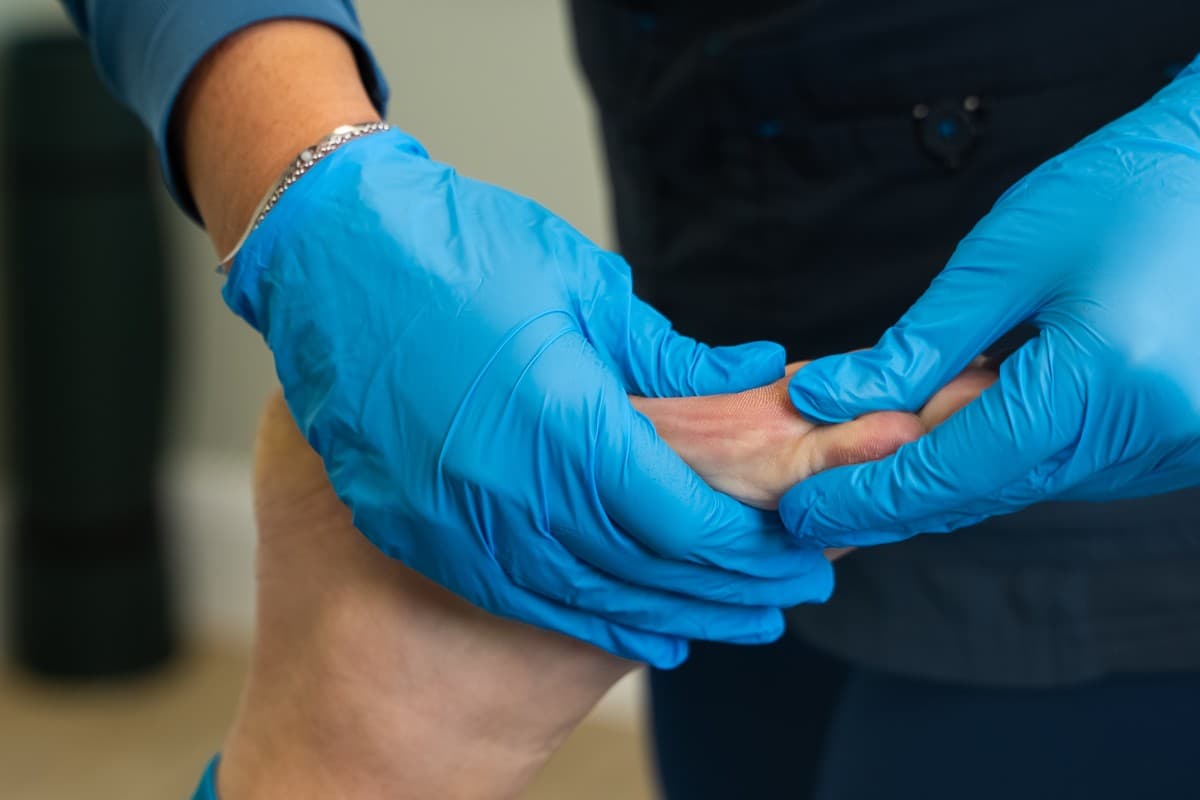



This is one of the questions we are asked most, and the honest answer is less satisfying than either extreme. Custom orthotics are not automatically better than a shop-bought insole. Plenty of people do not need either.
What matters is whether anyone has established where the load is actually going through your foot, and whether a device is the right tool for what is going wrong.
What a shop-bought insole does
An off-the-shelf insole is a generic shape, usually offering cushioning and some arch contact. For a lot of people that is genuinely enough - particularly if the problem is straightforward, recent, and mostly about comfort underfoot on hard surfaces.
They are inexpensive and available immediately. If you have mild, recent discomfort and no history of recurring injury, trying one is a reasonable first step, and we will say so rather than steering you toward something more expensive.
What they cannot do is address a specific pattern of overload, because they were not made for your foot and nobody measured anything.
Where the arch-shape idea goes wrong
Most insole marketing is built around arch height: high arch, low arch, neutral, pick the matching product.
The trouble is that how your foot looks standing still tells you very little about what it does when you walk. Two people with visually identical arches can load their feet in completely different ways. Static shape is a poor predictor of dynamic behaviour, and dynamic behaviour is what causes tissue overload.
What we measure instead
We use Gait and Motion Footscan pressure analysis, which records how force moves through the foot across multiple walking strikes - not a single static impression.
That shows where pressure peaks, how long it stays there, and how load transfers through the step cycle. It is the difference between a photograph and a video, and it is the information you need to decide whether a device will help and what it should do.
How Phits orthotics differ
Where the assessment supports a device, we prescribe Phits 3D-printed orthotics, manufactured by Materialise directly from your own pressure data.
The device is designed around the specific area that is overloaded, rather than selected from a range of stock shapes. That is the practical difference: not that it is custom for its own sake, but that it is built from a measurement of your actual problem.
When orthotics are not the answer
This is the part that usually goes unsaid, so it is worth being direct about it.
- If the underlying issue is muscle weakness, a device supports the foot but does not build capacity. Many people improve through targeted strengthening alone.
- If the tissue is simply under-prepared for a recent increase in activity, the answer is load management, not hardware.
- If nobody has established what is actually wrong, an orthotic is a guess with a price tag.
We will tell you when a device will not help you. That costs us a sale and saves you several hundred euro and a few months, which is the right trade.
Flat feet do not automatically need treating
Flat feet are extremely common and on their own are not a problem. A great many people have low arches and never have a symptom in their lives.
What causes trouble is when the way your foot distributes load creates strain somewhere else - the arch, the ankle, the knee or the lower back. Treating the arch shape alone misses that. If your flat feet do not hurt and are not causing problems further up the chain, they do not need fixing.
What about cost and insurance
We are registered with all the major Irish insurers, and most plans cover a significant proportion of the cost of orthotics. Cover varies by policy, so check with your insurer before committing. We provide a receipt after every appointment for you to claim.
A sensible order to do this in
- Get a diagnosis first. Know what is actually wrong before buying anything.
- Address strength and load where that is the driver.
- Consider a device where the pressure data shows a specific area needs offloading.
- Reassess. A device is part of a plan, not the whole of one.
You can book a biomechanical assessment directly at Finglas or Mount Merrion without a GP referral.
This article is general information about a common foot condition and is not a diagnosis or a treatment plan for any individual. Foot pain has several possible causes that present similarly, so if something is troubling you, have it assessed in person.
References
This page is for general information and does not replace individual clinical assessment. If symptoms persist, book an appointment with a CORU-registered podiatrist.