


If the worst pain of your day happens in the first ten steps out of bed, you are describing one of the most recognisable patterns in podiatry. It is also one of the most misread, because the thing that makes it feel better in the short term is the same thing that keeps it going.
What is happening while you sleep
The plantar fascia is a thick band of connective tissue running along the sole of your foot, from the heel to the base of the toes. It helps hold the arch and transmits load every time you push off.
Overnight, with your foot relaxed and pointing slightly downward, the tissue settles into a shortened position. It is not repairing itself neatly while you sleep - it is knitting together in whatever position it was left in. Then you stand up and put your entire body weight through it in one movement.
That first-step pain is the tissue being loaded suddenly after hours of no load at all. It eases after a few minutes because the tissue warms and stretches. The pain going away is not the problem resolving; it is the tissue getting through the shock of the first load.
Why it returns later in the day
Most people notice a second flare in the evening, or after a long period standing. That is the other half of the picture: the tissue has a limited capacity, and once you exceed it, symptoms come back.
So you have a tissue that hurts when loaded suddenly, and hurts again when loaded for too long. The window in between feels almost normal, which is exactly why people put off getting it looked at for months.
Why rest makes it feel better and no better
Rest reduces the load. Less load means less pain. That feels like progress, and for a week or two it is genuinely a relief.
But the reason the tissue became overloaded has not changed. In most cases it is not that you did something unusual - it is that the tissue could not tolerate what you were already doing. Take the load away entirely and the tissue does not get stronger; it gets weaker. Return to normal walking and you exceed its capacity again, usually faster than before.
It is not always the plantar fascia
Heel pain has several possible sources, and they need different treatment:
- Plantar fascia - pain under the heel, worst on first steps, tender to press on the inside of the heel bone.
- Achilles tendon - pain at the back of the heel rather than underneath, often with stiffness that eases as you warm up and is worse the day after activity.
- Heel fat pad - a deep, bruised ache directly under the heel bone, often in people who have lost cushioning through age or long periods on hard floors.
- Nerve involvement - burning, tingling or pain that radiates rather than staying in one spot.
Being handed an insole without establishing which of these you have is a guess. Sometimes the guess works. Often it does not, and several months disappear.
What a proper assessment looks at
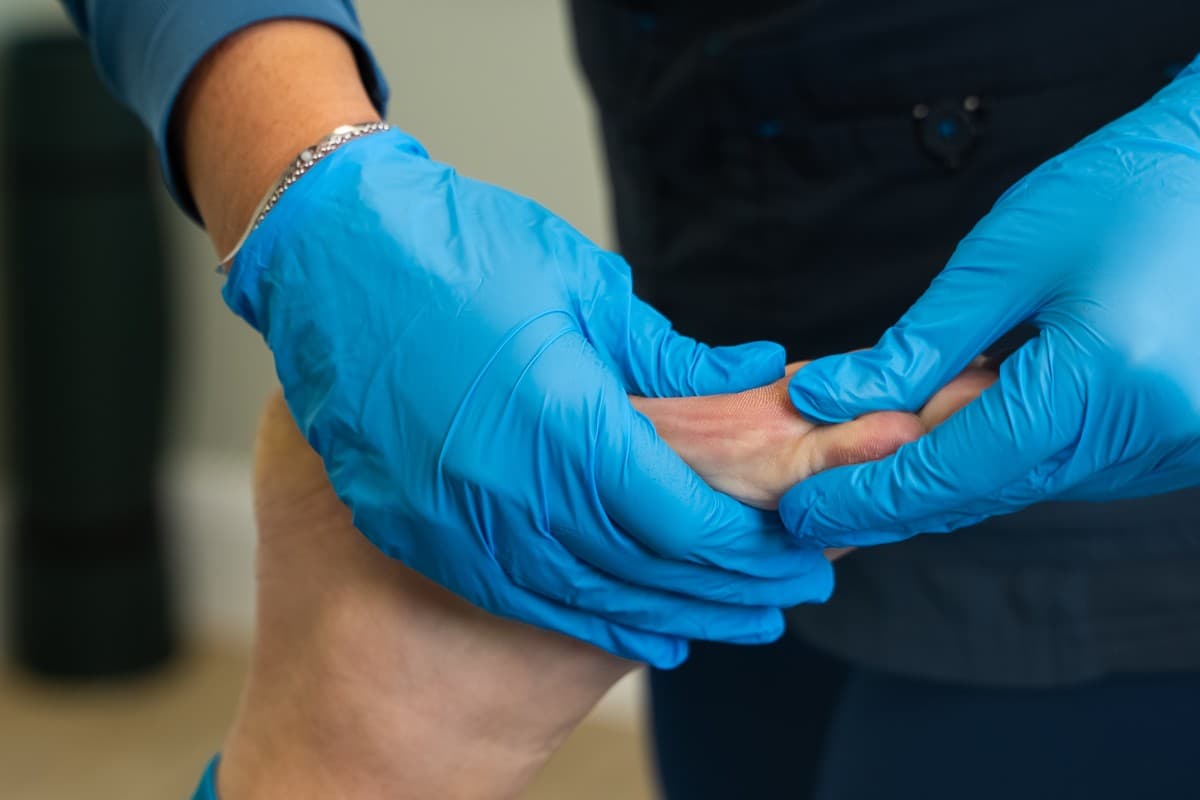
At our Finglas and Mount Merrion clinics, a first heel pain appointment is mostly conversation and hands-on testing: where exactly it hurts, when it started, what you have already tried, what it stops you doing, then joint range and muscle strength testing to separate one cause from another.
Where the problem is long-standing or keeps recurring, we add Gait and Motion Footscan pressure analysis. That records how force actually moves through your foot across multiple walking strikes, rather than how your arch looks standing still. Standing still tells you very little; the useful information is in where the load goes and when.
How it is treated properly
Our approach runs in four stages, and the third is the one that matters most:
- Assessment - establish which structure is involved and why it became overloaded.
- Pain relief - padding, strapping and Class 4 laser therapy to bring symptoms down far enough that rehabilitation can actually begin.
- Strength and progressive loading - build the tissue's capacity beyond where it was before. Slow, measured, and the stage most people never reach.
- Return to activity - get you back to what you want to do and keep you there.
Where the pressure data supports it, Phits 3D-printed orthotics are made from your own scan to offload the specific area under strain. Where the data does not support it, we say so. An orthotic is a tool for a particular problem, not a default.
When to get it looked at
If morning heel pain has been going on for more than three or four weeks, or it has settled and returned more than once, it is worth a proper diagnosis rather than another guess. Recurrence is the signal that the underlying cause has not been addressed.
You can book directly with us at either clinic - no GP referral is needed.
This article is general information about a common foot condition and is not a diagnosis or a treatment plan for any individual. Foot pain has several possible causes that present similarly, so if something is troubling you, have it assessed in person.
References
- Heel pain - HSE (Health Service Executive, Ireland)
- Heel pain - NHS
- Plantar fasciitis - HSE (Health Service Executive, Ireland)
This page is for general information and does not replace individual clinical assessment. If symptoms persist, book an appointment with a CORU-registered podiatrist.